
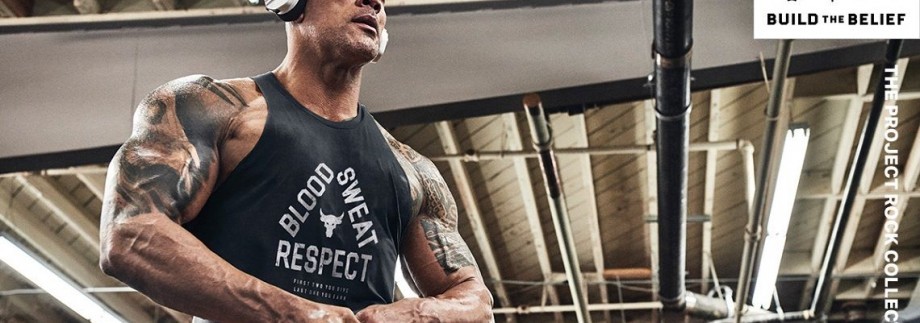
What was your goal when you started fitness? What is your goal now? Most say they want to transform their body. Sufficient muscle mass is necessary for a well-formed body. We will gain muscle mass through strength training. Strength is the foundation upon which movement skills are built. Strength training allows us to gradually strain the muscle and force it to adapt. The muscle adapts to the effort and grows as a result. Greater loads increase the tension on the muscle, and because of the increased tension, the muscle grows.
Then why does a fitness person have bigger muscles than someone who does powerlifting?
The weight of the load isn't the only factor affecting muscle growth. The training should include higher loads and a low number of repetitions and lighter loads with a higher number of repetitions. Hypertrophy is achieved by lifting heavy loads due to mechanical stress. Lifting heavy loads during complex exercises (squats, deadlifts, etc.) activates a large number of motor units or muscles. The forces involved in lifting are high and lead to muscle strain and muscle growth.
How do I start exercising to build muscle mass?
When building muscle mass - hypertrophy - it is important how many times per week we train the muscle. We get better results if we train each muscle several times a week (the volume stays the same). The so-called "bro split" practiced by the vast majority is not the best solution for building muscle. The bro split principle usually looks like this: Monday - chest, Tuesday - legs, etc. By the end of the week.
How do you put that into practice? For example, on Monday we train the chest. We do 6 exercises with 4 sets. We prefer to divide the training into 2 parts. On Monday we do 3 exercises with 4 sets and on Thursday we do the remaining 3 exercises. It makes more sense to include a larger number of muscle groups in the training. Training the muscle twice a week is more effective. Both beginners and experienced athletes are recommended to train each muscle group 2-3 times a week for optimal results.
Have you ever come across "RM" while reading articles or training programs? You almost certainly are. 1RM refers to the maximum load we can only lift once. We know three levels of intensity, namely:
• high intensity (1-5 RM)
• medium intensity (6-15 RM)
• low intensity (15+ RM)
If our goal is to increase muscle mass, it is recommended to train at moderate intensity (6-15 RM).
HOW DO WE DETERMINE TRAINING VOLUME?
Volume is the load per individual exercise, training session and week. How do we determine the volume? Volume = number of sets X number of reps X weight.
For optimal muscle growth, it's recommended to perform 4-6 sets of 8-12 repetitions per muscle for each individual workout.
But what about the breaks between sets and exercises? "I need as few breaks as possible between sets." This statement is often heard, but it is not true. Between each series it is necessary to take enough breaks to allow the muscle to regenerate and to maintain the intensity and load. A break of 3-5 minutes is useful for high-intensity training and 2 minutes for medium-intensity training. For a low-intensity workout, the break should be between 30 and 90 seconds. Breaks that are too short have a negative effect on training performance.
HOW TO SELECT THE EXERCISES?
Isolation exercises like leg extensions or leg presses are certainly easier to perform, and many people feel more confident on the machine than with a bar on their back. But from the point of view of effectiveness, complex exercises such as squats, deadlifts, chest thrusts, overhead thrusts are most important. Training should consist mainly of complex exercises that activate several muscle groups at once.
Lower slowly, raise faster? Instead of focusing on the tempo of the exercise - whether we lower the weight in 2 seconds or 4 seconds doesn't really matter - we focus on the execution of each exercise. Because of individual differences, it will be difficult to find a specific training program for each individual. An individual approach and the composition of the training program based on the analysis of the individual (vulnerabilities, response to training ...) is required. Two people can get completely different results from the exact same workout routine.
Leave a Comment